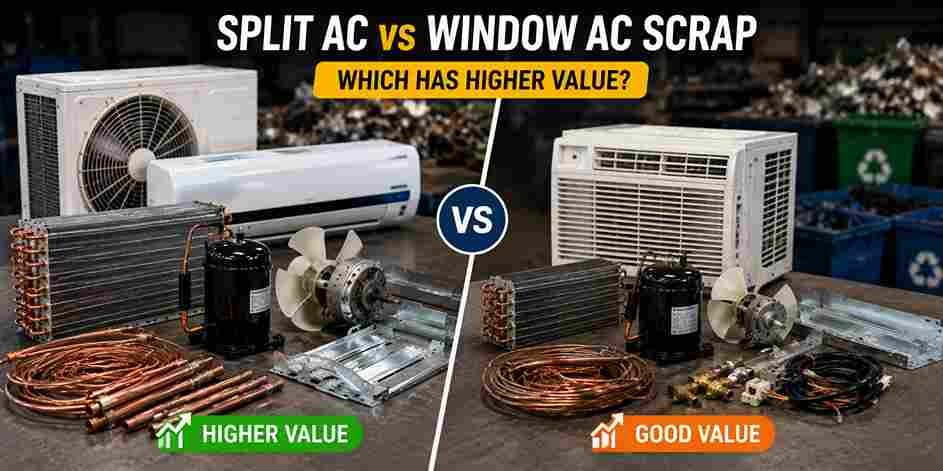
Many people replacing an old air conditioner often wonder whether a split AC or a window AC provides better recycling value. Understanding Split AC vs Window AC Scrap is important because both systems contain recyclable metals such as copper, aluminium, steel, and brass, but the quantity and quality of these materials can vary significantly. Knowing these differences helps homeowners, contractors, and businesses estimate the potential value of their old cooling systems before selling them for recycling.
As Dubai continues to upgrade residential buildings, commercial properties, and industrial facilities, thousands of air conditioners are replaced every year. Professional scrap buyers in Dubai inspect each unit carefully, evaluate the recoverable materials, and determine its value based on metal content, condition, and current market prices. Choosing the right recycling company and understanding what makes one AC type more valuable than another can help sellers maximize their returns.
In this guide, you will learn the major differences between split AC and window AC scrap, the valuable components found inside each system, and the key factors that influence their recycling value. You will also discover which type usually offers higher returns and how to prepare your old air conditioner before selling it for recycling.
Understanding Split AC and Window AC Systems
Before comparing their recycling value, it is helpful to understand how these two air conditioning systems are built. Understanding Split AC vs Window AC Scrap starts with knowing that although both systems are designed to cool indoor spaces, their internal construction, component layout, and the quantity of recyclable materials differ considerably. These structural differences directly influence how much copper, aluminium, steel, and other valuable metals can be recovered after dismantling, ultimately affecting their overall scrap value.
Professional recycling companies separate each component individually rather than valuing the entire unit as a single item. Copper coils, compressors, aluminium condensers, steel frames, electrical wiring, fan motors, and brass fittings are all inspected carefully to calculate the total recycling value. This detailed assessment ensures sellers receive a fair valuation based on the quality and quantity of recoverable materials rather than the size of the air conditioner alone.
What Is a Split Air Conditioner?
A split air conditioner consists of two separate units connected by insulated copper refrigerant pipes. The indoor unit contains the evaporator coil and blower, while the outdoor unit houses the compressor, condenser coil, condenser fan, and other mechanical components. Because these systems are larger and more complex, they generally contain greater quantities of recyclable metals.
Split AC systems are commonly installed in villas, apartments, offices, hotels, retail stores, hospitals, and commercial buildings throughout Dubai. Their larger size usually means more copper tubing, bigger compressors, additional electrical wiring, and heavier aluminium coils, all of which contribute to a higher recycling value.
What Is a Window Air Conditioner?
A window air conditioner combines all cooling components into a single compact cabinet that fits inside a window or wall opening. The compressor, condenser, evaporator, fan motor, and electrical controls are all housed within one unit, making installation relatively simple compared to split systems.
Window AC units are generally smaller and lighter than split air conditioners. Although they still contain valuable recyclable materials, the total quantity of copper, aluminium, and steel is usually lower. For this reason, window AC scrap often has a lower overall recycling value than larger split air conditioning systems.
Valuable Components Found in Both AC Types
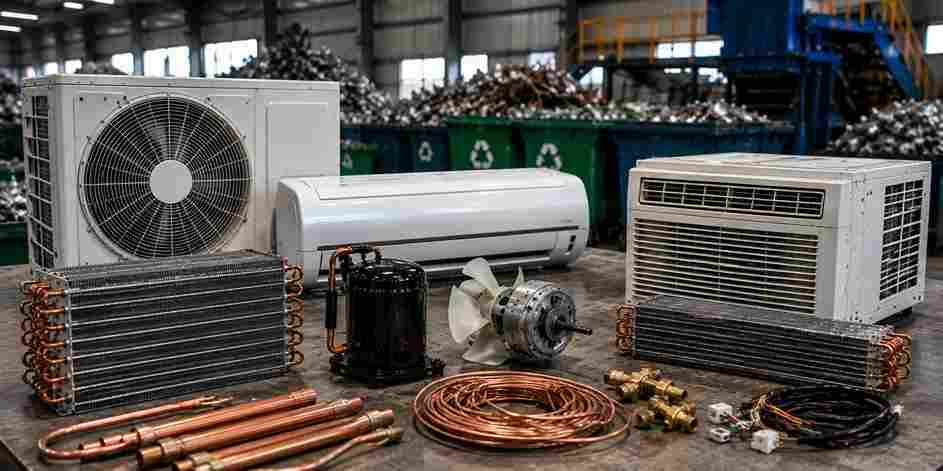
Both split and window air conditioners contain recyclable materials that remain valuable even after the equipment stops working. Professional recyclers dismantle every unit carefully to recover metals that can be processed and reused in manufacturing industries. While the same types of materials are found in both systems, the quantity and weight often differ significantly.
Understanding which components contribute the most value helps explain why one type of air conditioner may receive a higher recycling price than another.
Copper Coils and Refrigerant Pipes
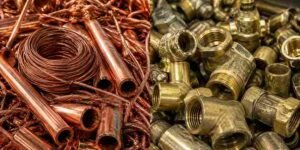
Copper is the highest-value recyclable metal inside most air conditioning systems. It is used extensively in evaporator coils, condenser coils, refrigerant tubing, and electrical wiring because of its excellent heat transfer and electrical conductivity. Split AC systems usually contain longer refrigerant pipes connecting the indoor and outdoor units, resulting in a greater quantity of recoverable copper.
Window air conditioners also contain copper coils, but because the entire cooling system is built into one compact cabinet, the amount of copper is generally lower. This difference in copper content is one of the main reasons split AC scrap often commands a higher overall recycling value.
Compressors and Electric Motors
The compressor is one of the most valuable components inside any air conditioner because it contains copper windings, steel housing, and other recyclable metals. Split AC systems usually use larger compressors designed to cool bigger spaces, which means they often contain more recoverable materials than compressors found inside compact window units.
Electric fan motors also contribute to the recycling value. Both air conditioner types include copper windings inside their motors, but larger split AC systems frequently use heavier-duty motors capable of handling greater cooling loads. These additional materials increase the total recyclable value recovered during dismantling.
Aluminium, Steel, and Electrical Components
Aluminium is commonly used in condenser fins, evaporator sections, and structural components because it is lightweight and corrosion resistant. Steel frames, mounting brackets, electrical wiring, circuit boards, and brass fittings are also recovered during the recycling process.
Although both split and window air conditioners contain these materials, split systems generally include larger heat exchangers, heavier steel components, and longer electrical wiring. These additional materials contribute to a higher total recycling weight and often improve the final valuation offered by professional recycling companies.
Split AC Scrap vs Window AC Scrap: A Detailed Comparison
Choosing between split AC scrap and window AC scrap is not simply about the size of the air conditioner. Professional recyclers evaluate the quantity of recoverable metals, the condition of internal components, the ease of dismantling, and the overall weight before determining the recycling value. While both systems contain valuable recyclable materials, split air conditioners generally provide a greater amount of recoverable copper and aluminium because of their larger design.
Window air conditioners, however, still remain valuable recycling assets, especially when they are complete and contain undamaged compressors and copper coils. Their compact construction makes transportation and dismantling easier, but the total quantity of recyclable metals is usually lower than that of split systems. Understanding these differences allows sellers to estimate which type of air conditioner is likely to generate a better recycling return.
Copper Content Comparison
Copper is the most valuable recyclable material inside both air conditioning systems, making it one of the biggest factors influencing scrap value. Split air conditioners usually contain more copper because the indoor and outdoor units are connected by insulated refrigerant pipes. These additional copper tubes, along with larger condenser and evaporator coils, increase the total amount of recoverable copper available during recycling.
Window air conditioners also contain copper coils and internal tubing, but their compact construction requires much shorter refrigerant lines. As a result, the overall copper content is generally lower. Since copper continues to command strong demand within the recycling industry, this difference often gives split AC units an advantage when calculating overall scrap value.
Compressor Size and Recycling Value
The compressor is another component that significantly affects the recycling price of an air conditioner. Split AC systems typically use larger compressors because they are designed to cool bigger residential and commercial spaces. Larger compressors contain heavier steel housings, larger copper windings, and additional recyclable materials that contribute to a higher overall valuation.
Window AC compressors are usually smaller and lighter because they serve compact cooling systems. Although they still contain valuable copper and steel, the total recoverable metal is generally less than that found inside split AC compressors. Professional recycling companies carefully inspect compressor condition before estimating its contribution to the overall scrap value.
Aluminium and Steel Recovery
Both air conditioner types contain aluminium condenser fins, evaporator components, protective covers, and steel structural frames. Split air conditioners often use larger heat exchangers and stronger outdoor cabinets, allowing recyclers to recover a greater quantity of aluminium and steel during dismantling.
Window air conditioners contain the same materials but in smaller quantities due to their compact design. Although aluminium has a lower market value than copper, its lightweight nature and excellent recyclability still make it an important contributor to the overall recycling value of an air conditioning system.
| Split AC Scrap | Comparison Factor | Window AC Scrap |
|---|---|---|
| ★★★★★ Very High | Overall Scrap Value | ★★★★☆ High |
| Higher Quantity | Copper Content | Moderate Quantity |
| Larger Compressor | Compressor Size | Smaller Compressor |
| More Aluminium | Aluminium Components | Less Aluminium |
| Heavier Unit | Total Weight | Lighter Unit |
| More Refrigerant Pipes | Copper Tubing | Limited Copper Tubing |
| Higher Recovery Potential | Recyclable Materials | Good Recovery Potential |
| Suitable for Residential & Commercial Buildings | Common Applications | Mainly Residential Use |
| AED 180–650+ (Estimated) | Estimated Scrap Value in Dubai | AED 70–250+ (Estimated) |
| Best Choice for Higher Returns | Overall Recommendation | Good for Small-Scale Recycling |
Which Air Conditioner Usually Has the Higher Scrap Value?
When comparing overall recycling value, split air conditioners usually receive higher quotations because they contain more recoverable materials. Larger compressors, additional refrigerant pipes, heavier copper coils, and greater quantities of aluminium all contribute to a higher total recycling weight. Commercial split systems often provide even greater value because they contain industrial-grade components with increased metal content.
However, this does not automatically mean every split AC is worth more than every window unit. The condition of the equipment, the age of the system, and current market prices for recyclable metals also influence the final quotation. A well-maintained window air conditioner with clean components may sometimes receive a better offer than a severely damaged split system that has missing or contaminated parts.
Age and Condition Matter
Older air conditioners often contain more copper than some newer energy-efficient models that use additional aluminium components to reduce manufacturing costs. Because of this, the production year of an air conditioner can influence its recycling value alongside its physical condition.
Air conditioners that remain complete, free from excessive corrosion, and protected from damage during storage are generally easier to dismantle. Intact copper coils, compressors, and electrical wiring allow recyclers to recover materials more efficiently, improving the overall recycling outcome.
Current Metal Prices Influence Value
International market prices for copper, aluminium, steel, and brass change regularly based on global supply and demand. Since these metals make up most of an air conditioner’s recyclable value, fluctuations in commodity markets directly affect recycling quotations.
Professional recyclers monitor these market conditions closely when preparing quotations for customers. Sellers planning to recycle multiple air conditioning units often benefit from checking current market trends before arranging collection, especially when recycling large commercial systems.
Which One Should You Recycle?
If your primary goal is to maximize recycling value, a complete split air conditioner generally offers the strongest return because it contains more copper, larger compressors, and heavier recyclable components. Nevertheless, window air conditioners should never be overlooked, as they still contain valuable recyclable metals that contribute to sustainable resource recovery.
Working with an experienced Scrap Purchasing Company in Dubai ensures every recyclable component is identified, weighed accurately, and processed responsibly. Professional inspection and transparent grading help sellers receive fair market value while supporting environmentally responsible recycling practices.
Factors That Affect the Scrap Value of Split AC and Window AC
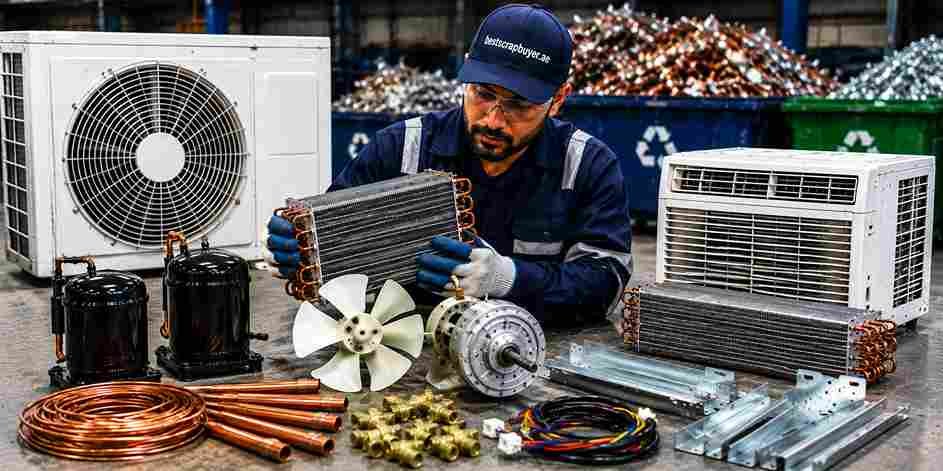
Although split air conditioners generally have a higher recycling value, the final quotation depends on several important factors. Professional recyclers do not determine prices based only on the type of air conditioner. Instead, they carefully inspect the quantity of recyclable metals, the condition of individual components, and the current market value of copper, aluminium, steel, and brass before preparing a quotation.
Understanding these pricing factors helps homeowners, contractors, and businesses estimate the value of their old air conditioners before selling them. Proper preparation and responsible handling also improve the recycling process while helping valuable materials remain in good condition.
Quantity of Recoverable Copper
Copper remains the most valuable material inside almost every air conditioning system. Split AC units usually contain longer refrigerant pipes, larger condenser coils, and bigger evaporator coils, allowing recyclers to recover more copper during dismantling. Since copper prices remain relatively strong throughout the recycling industry, the total amount of recoverable copper has a direct impact on the overall scrap value.
Window air conditioners also contain valuable copper components, but because the cooling system is built into a single compact cabinet, the quantity of copper is generally lower. Professional recyclers carefully separate clean copper from other metals to maximize material recovery before recycling.
Weight of Recyclable Materials
The total weight of recyclable metals is another important pricing factor. Larger air conditioning systems naturally contain more aluminium, steel, copper, and brass than smaller units. Commercial split systems often weigh significantly more than residential window units, making them more valuable for recycling.
Weight alone, however, does not determine the final quotation. The quality and purity of the recovered metals remain equally important because cleaner materials require less processing before they can be reused in manufacturing.
Overall Condition of the Air Conditioner
The physical condition of an old air conditioner also affects its recycling value. Units that remain complete and have not been heavily damaged during removal or transportation are generally easier to dismantle. Compressors, copper coils, electric motors, and aluminium condensers that remain intact allow recyclers to recover valuable materials more efficiently.
Excessive rust, contamination, missing parts, or damaged components may reduce the quantity of recoverable metals and increase processing time. Keeping the equipment protected until collection helps preserve its recyclable value.
Tips to Maximize the Value of Your AC Scrap
A few simple preparation steps can help improve the recycling process and ensure valuable components remain in good condition. Although professional recyclers handle dismantling, proper handling before collection allows the equipment to be inspected more efficiently and reduces unnecessary material damage.
These recommendations are especially useful for contractors, facility managers, demolition companies, and homeowners replacing multiple air conditioning systems during renovation projects.
Keep the Air Conditioner Complete
Whenever possible, avoid removing valuable components before selling the unit for recycling. Compressors, copper tubing, fan motors, aluminium condensers, and electrical wiring all contribute to the overall value of the equipment. A complete air conditioner allows recyclers to evaluate every recyclable component accurately.
Removing parts without proper knowledge may accidentally damage valuable materials, reducing the efficiency of the recycling process and affecting the final valuation.
Protect Copper Components
Copper coils and refrigerant pipes are among the most valuable materials inside both split and window air conditioners. Avoid bending, crushing, or cutting these components unnecessarily before collection. Keeping copper intact allows professional recyclers to recover high-quality material with minimal processing.
Proper storage also helps prevent contamination from dirt, oil, or moisture, preserving the overall quality of recyclable metals until inspection.
Work With an Experienced Recycling Company
Choosing reliable scrap dealers Dubai ensures your air conditioner is inspected professionally using transparent grading and weighing procedures. Experienced recycling companies understand how to recover valuable materials safely while following environmental regulations for refrigerant recovery and responsible disposal.
Working with qualified recyclers also provides greater confidence that copper, aluminium, steel, compressors, and electronic components will all be processed responsibly rather than being discarded unnecessarily.
Is Split AC Scrap Always Worth More Than Window AC Scrap?
In most situations, split air conditioners produce higher recycling returns because they contain larger compressors, more copper tubing, heavier condenser coils, and greater quantities of aluminium. These additional materials increase the overall amount of recyclable metal recovered during dismantling, making split systems more attractive to recycling facilities.
However, there are situations where a window air conditioner may provide comparable value. A complete window AC in excellent condition with an intact compressor and clean copper coils may receive a stronger quotation than a damaged split system with missing components. This is why professional inspection remains essential before estimating the final recycling value.
Ultimately, both air conditioner types contain valuable recyclable materials that should never be discarded as general waste. Responsible recycling supports environmental sustainability while allowing homeowners and businesses to recover value from equipment that has reached the end of its service life.
Frequently Asked Questions
1. Why does split AC scrap usually have a higher recycling value?
Split air conditioners generally contain more copper tubing, larger compressors, heavier aluminium coils, and additional recyclable materials than window AC units. These extra components increase their overall recycling value.
2. Can an old window AC still be worth recycling?
Yes. Even if a window air conditioner is no longer working, it still contains valuable copper, aluminium, steel, compressors, and electrical components that can be recovered and recycled responsibly.
3. Does removing copper pipes before selling increase the scrap value?
In most cases, selling a complete air conditioner allows professional recyclers to inspect and value all recyclable components accurately. Removing parts incorrectly may damage valuable materials and reduce the overall recycling value.
4. Which AC type contains more copper?
Split air conditioners usually contain more copper because they include longer refrigerant pipes, larger condenser coils, evaporator coils, and bigger compressors compared to window AC units.
5. How can I receive the best price for my air conditioner scrap?
Keep the air conditioner complete, protect valuable components from damage, avoid unnecessary dismantling, and work with a trusted recycling company that follows transparent inspection and weighing procedures.
Conclusion
Understanding Split AC vs Window AC Scrap helps homeowners, contractors, property managers, and businesses make informed decisions before recycling old cooling systems. While both types of air conditioners contain valuable recyclable materials such as copper, aluminium, steel, compressors, and electrical wiring, split AC units generally offer a higher recycling value because they contain larger compressors, more copper tubing, and heavier metal components. However, the final quotation always depends on the condition of the unit, the quantity of recoverable materials, and current market prices.
If you want to recycle your old split or window air conditioner safely and receive competitive market rates, BestScrapBuyer provides professional collection, transparent inspections, and reliable recycling services across Dubai. Our experienced team ensures every recyclable component is handled responsibly while helping you maximize the value of your unwanted air conditioning equipment.
📞 Call BestScrapBuyer today at +9710509973816 to request a free quotation and schedule your air conditioner scrap collection anywhere in Dubai.