Air conditioners eventually reach the end of their service life, but that does not mean they lose all their value. Understanding the Complete Guide to Air Conditioner Scrap Recycling helps homeowners, contractors, HVAC technicians, facility managers, and businesses recover valuable recyclable materials while reducing environmental waste. Every discarded air conditioner contains metals such as copper, aluminium, steel, and brass that can be recovered, processed, and reused in manufacturing, making recycling both environmentally responsible and financially beneficial.
As Dubai continues to expand with new residential communities, commercial buildings, and industrial developments, thousands of old air conditioning systems are replaced every year. Instead of sending these units to landfill sites, professional recycling companies safely dismantle them, recover valuable metals, and dispose of hazardous components according to environmental standards. Choosing experienced scrap buyers in Dubai ensures recyclable materials are handled efficiently while maximizing the value of unwanted AC units.
This complete guide explains how air conditioner scrap recycling works, which parts of an AC unit are the most valuable, how professional recyclers process old systems, and what factors influence their recycling value. You will also discover practical tips for preparing air conditioners before collection and learn how responsible recycling supports both environmental sustainability and the circular economy.
What Is Air Conditioner Scrap Recycling?
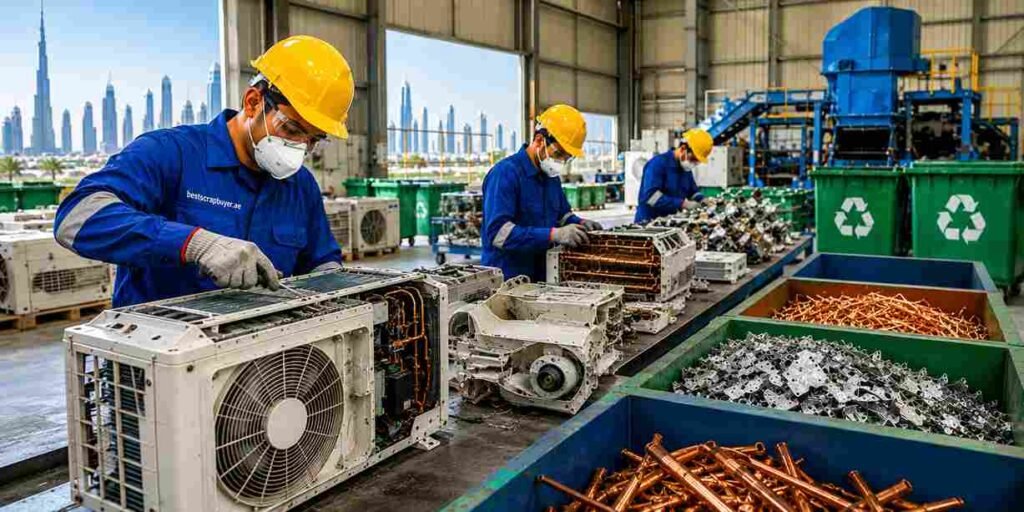
Air conditioner scrap recycling is the process of collecting, dismantling, sorting, and recovering reusable materials from old, damaged, or non-functioning air conditioning systems. Rather than disposing of these units as general waste, professional recycling facilities carefully separate valuable metals, plastics, electronic components, and refrigerants before sending recyclable materials back into the manufacturing industry. This process helps reduce landfill waste while conserving natural resources through responsible material recovery.
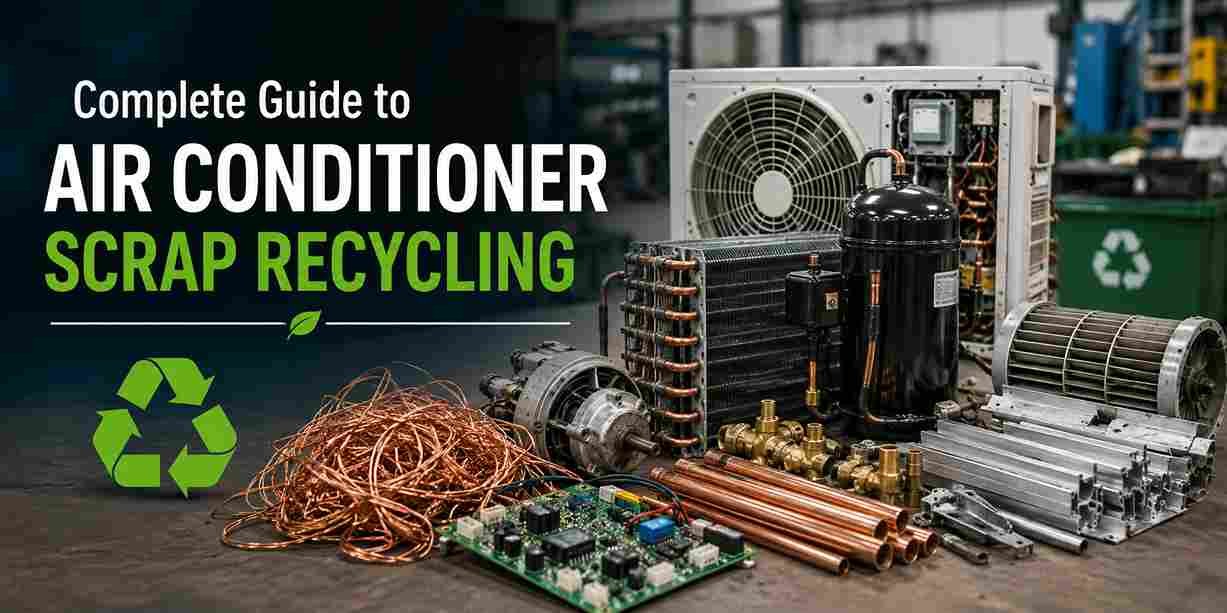
Modern air conditioners contain a significant amount of recyclable materials that retain considerable value even after the unit stops working. Copper tubing, aluminium coils, steel frames, electric motors, compressors, brass fittings, and electrical wiring can all be recovered and processed into raw materials for new industrial products. Professional recycling companies use specialized equipment to dismantle AC units safely, ensuring that each material is separated according to its recycling category.
Why Air Conditioner Recycling Is Important
Air conditioners contain refrigerants, electrical components, lubricants, and various metals that require proper handling during disposal. If these systems are abandoned or dismantled incorrectly, refrigerants can escape into the atmosphere while hazardous materials may contaminate the surrounding environment. Responsible recycling prevents these risks by ensuring every component is processed according to environmental regulations and industry best practices.
Recycling also reduces the demand for newly mined raw materials. Recovering copper, aluminium, and steel from discarded air conditioners requires significantly less energy than producing the same metals from natural ores. This helps lower carbon emissions while supporting sustainable manufacturing across multiple industries.
Types of Air Conditioners That Can Be Recycled
Almost every type of air conditioning system contains recyclable materials. Whether the unit comes from a residential property, office building, shopping mall, factory, warehouse, or hotel, professional recyclers can recover valuable metals through specialized dismantling procedures.
Common recyclable air conditioning systems include:
- Split Air Conditioners
- Window Air Conditioners
- Central Air Conditioning Systems
- Ducted AC Units
- Package Air Conditioning Units
- Rooftop Cooling Systems
- Commercial HVAC Systems
- Industrial Cooling Equipment
Each system contains different quantities of copper, aluminium, compressors, motors, and steel depending on its size, age, and manufacturer. Larger commercial systems generally contain significantly more recyclable metals than smaller residential units, making them especially valuable for recycling.
Valuable Materials Found Inside Air Conditioners
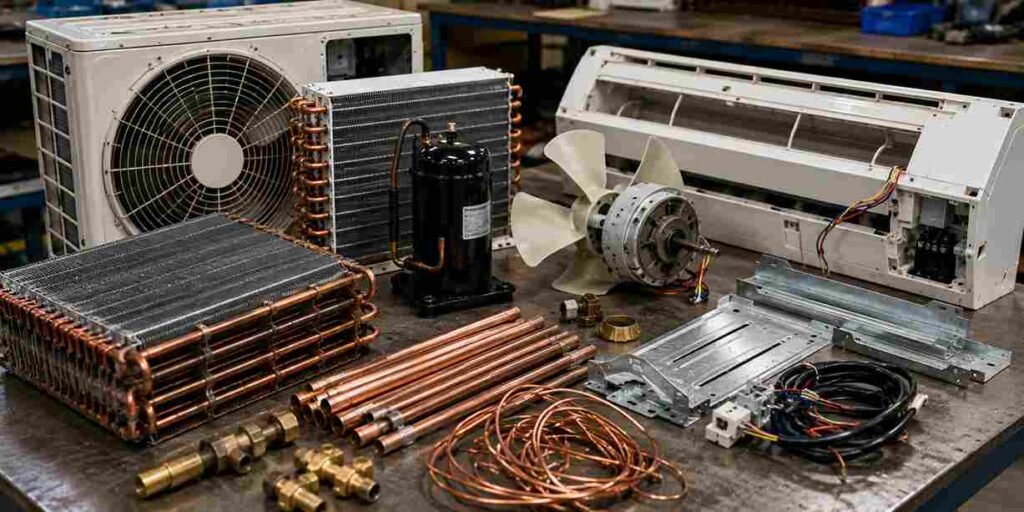
One of the biggest reasons air conditioner recycling has become increasingly popular is the variety of valuable materials contained inside every unit. While many people only notice the outer metal casing, professional recyclers understand that the highest-value components are usually hidden inside the system. By carefully dismantling each unit, recycling facilities recover multiple recyclable materials that continue to have strong demand across manufacturing industries.
The value of an air conditioner depends on the quality, weight, and condition of these materials. Clean, well-preserved components are generally easier to process and contribute to a more efficient recycling operation. Proper dismantling also prevents damage to valuable metals, allowing recycling companies to maximize material recovery while reducing unnecessary waste.
Copper Coils and Copper Tubing
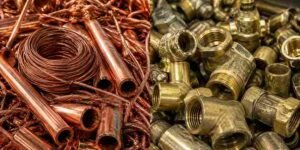
Copper is the most valuable recyclable material found inside most air conditioners. It is used extensively in condenser coils, evaporator coils, refrigerant tubing, and electrical wiring because of its outstanding thermal conductivity and corrosion resistance. Since copper can be recycled repeatedly without losing its quality, it remains one of the most sought-after metals in the recycling industry.
Professional recyclers carefully remove copper components before separating them according to purity and condition. Clean copper tubing and coils often command higher recycling values because they require less processing before being converted into new industrial products.
Aluminium Components
Aluminium is another important recyclable material found throughout modern air conditioning systems. Cooling fins, condenser assemblies, evaporator sections, and structural components frequently contain lightweight aluminium designed to improve cooling efficiency while reducing the overall weight of the equipment.
After dismantling, aluminium is separated from copper and steel before entering dedicated recycling processes. Recycled aluminium requires only a fraction of the energy needed to produce new aluminium, making its recovery environmentally and economically valuable.
How Does the Air Conditioner Scrap Recycling Process Work?
Air conditioner recycling involves much more than simply taking apart an old cooling unit. This Complete Guide to Air Conditioner Scrap Recycling explains how professional recycling companies follow a structured process to recover valuable materials while ensuring hazardous components are handled safely. Every stage, from collection and refrigerant recovery to material separation, is carried out using specialized equipment and trained technicians to maximize recycling efficiency, protect the environment, and recover the highest possible value from old air conditioning systems.
A properly recycled air conditioner allows valuable metals such as copper, aluminium, steel, brass, and electrical components to return to the manufacturing industry instead of ending up in landfill sites. This responsible recycling process conserves natural resources, reduces environmental waste, lowers the demand for newly mined raw materials, and supports sustainable recycling practices throughout Dubai’s growing construction, commercial, and industrial sectors.
Collection and Initial Inspection
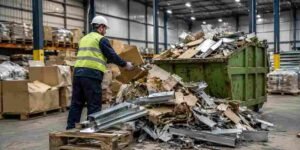
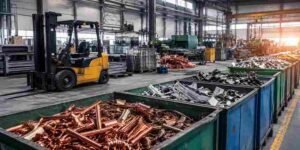
The recycling process begins with collecting old or non-working air conditioning units from residential properties, offices, commercial buildings, factories, hotels, and construction sites. Once the equipment arrives at the recycling facility, technicians carry out a detailed inspection to assess its condition, identify reusable parts, and estimate the quantity of recyclable materials inside.
During this inspection, professionals also check whether the air conditioner still contains refrigerant gas or other hazardous substances that require controlled removal before dismantling begins. Proper assessment helps recyclers plan the safest and most efficient recovery process while ensuring valuable components remain protected from unnecessary damage.
Safe Refrigerant Recovery
One of the most important stages of air conditioner recycling is the safe removal of refrigerant gas. Modern air conditioning systems contain refrigerants that must never be released directly into the atmosphere because they can contribute to environmental pollution and climate-related impacts. Professional recycling facilities use certified recovery equipment to extract refrigerants safely before dismantling the unit.
Recovered refrigerants are either recycled, reclaimed, or disposed of according to environmental regulations. This careful handling protects both workers and the environment while ensuring the remaining components can be processed safely during the recycling operation.
Dismantling and Material Separation
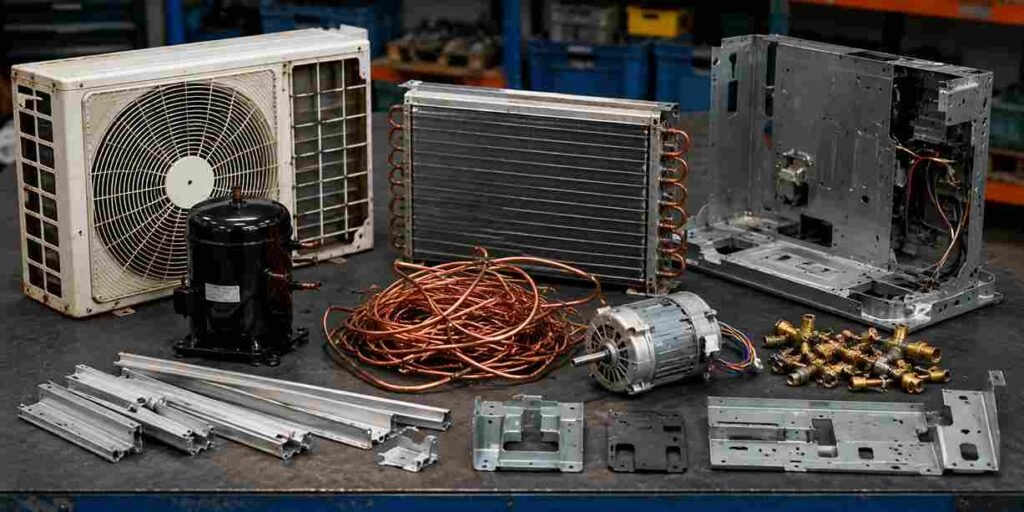
After hazardous materials have been removed, technicians begin dismantling the air conditioner into individual components. Compressors, copper tubing, aluminium coils, steel frames, electric motors, fans, electronic control boards, and wiring are separated carefully to prevent contamination between different recyclable materials.
Sorting materials at this stage improves recycling efficiency because each metal follows its own recycling process. Clean separation also helps maintain the quality of recovered materials, allowing recycling companies to achieve better recovery rates while supplying manufacturers with high-quality recycled raw materials.
Valuable Components That Increase Air Conditioner Scrap Value
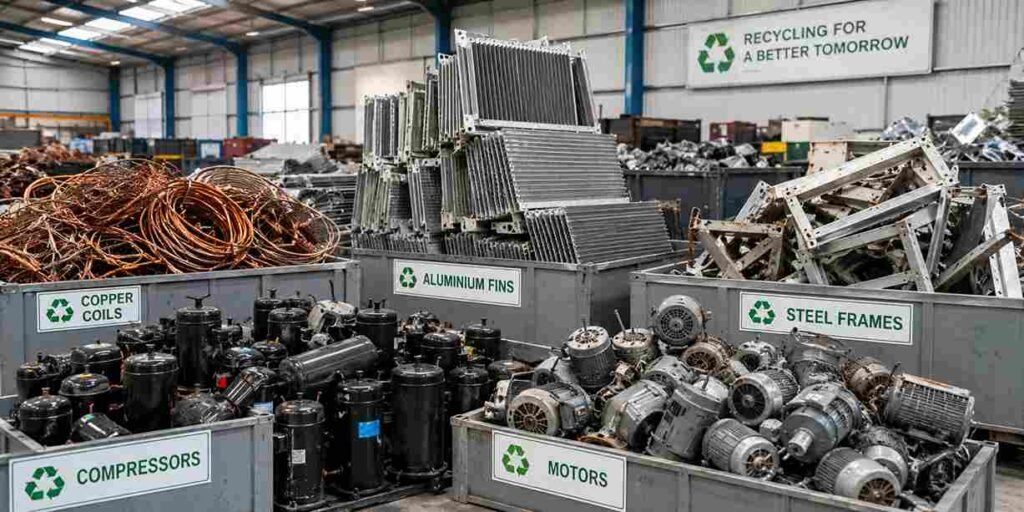
Not every part of an air conditioner has the same recycling value. Some components contain premium metals that are in constant demand across manufacturing industries, while others have lower recycling value due to their composition or processing requirements. Understanding which parts are most valuable helps sellers appreciate why professional dismantling plays such an important role in maximizing the worth of old cooling systems.
Experienced scrap dealers Dubai carefully evaluate each component individually instead of assigning a single value to the entire unit. This detailed assessment ensures that high-value materials are identified correctly before pricing is calculated.
AC Compressor Scrap
The compressor is often considered one of the most valuable parts inside an air conditioning system. It contains copper windings, steel housing, and other recyclable metals that can be recovered after dismantling. Larger commercial compressors generally contain more copper than residential models, increasing their overall recycling value.
Specialized recycling equipment is used to open compressors safely and separate copper from steel and other materials. Because compressors require additional labour during dismantling, professional recycling companies evaluate their condition carefully before determining their value.
Copper Coils and Refrigerant Tubes
Copper coils are among the highest-value materials found in both residential and commercial air conditioning systems. Condenser coils, evaporator coils, and refrigerant pipes contain high-quality copper that can be recycled repeatedly without losing its physical properties. Their excellent thermal conductivity makes recycled copper highly desirable for manufacturing new cooling equipment and electrical products.
The condition of copper coils directly influences their recycling value. Clean coils with minimal contamination require less processing, making them more attractive to recycling facilities and manufacturers.
Aluminium Condensers and Cooling Fins
Aluminium is widely used throughout modern air conditioners because it is lightweight, corrosion-resistant, and highly efficient at transferring heat. Condenser fins, evaporator fins, and structural components are typically manufactured from aluminium, making them an important source of recyclable metal.
After separation, aluminium is processed independently from copper and steel before being supplied to manufacturers. Recycling aluminium consumes significantly less energy than producing new aluminium from raw materials, making it an environmentally responsible choice.
Electric Motors, Fans, and Steel Parts
Electric fan motors contain valuable copper windings, while the external housing usually consists of steel or aluminium. Although these components generally contain less copper than compressors, they still contribute meaningful recycling value when processed correctly.
The steel frame, mounting brackets, fasteners, and protective covers are also recovered during dismantling. Although steel has a lower market value than copper, it represents a large percentage of the overall weight of many air conditioning systems, making it an important recyclable material.
Electronic Components and Brass Fittings
Modern air conditioners include circuit boards, wiring harnesses, sensors, switches, and electronic controllers that require specialized recycling procedures. Some electronic parts contain small quantities of recoverable metals, while brass valves and pipe fittings can also be separated and recycled independently.
Professional recyclers carefully inspect these components before sending them through dedicated recycling processes. Proper separation improves recovery efficiency while reducing unnecessary waste during dismantling.
Factors That Affect Air Conditioner Scrap Value
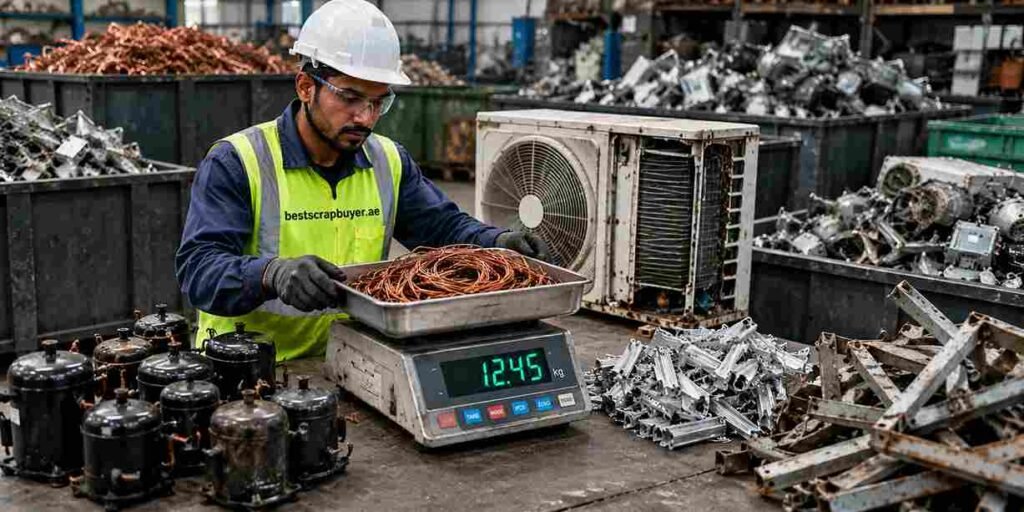
The recycling value of an air conditioner depends on much more than its size or age. Professional recycling companies evaluate several important factors before offering a quotation because every AC unit contains different quantities of recyclable materials. Understanding these factors allows sellers to estimate the potential value of their equipment and prepare it properly before arranging collection.
Whether you are recycling a single residential air conditioner or multiple commercial HVAC systems, knowing what influences pricing helps avoid misunderstandings during inspection. Proper preparation and material condition often make a noticeable difference in the final valuation offered by professional recyclers.
Copper Content
Copper is the most valuable recyclable material found inside an air conditioner and is usually the biggest factor affecting its overall scrap value. Older air conditioning units often contain larger quantities of copper tubing and condenser coils compared to some modern systems that use more aluminium components. Units with higher copper content generally receive stronger market valuations because copper remains one of the most sought-after recyclable metals.
Professional recyclers carefully inspect copper coils, refrigerant pipes, electrical wiring, and compressor windings before determining the copper recovery potential. The cleaner and less contaminated the copper is, the easier it is to recycle, which helps improve its overall value.
Size and Type of Air Conditioner
The type of air conditioning system also plays an important role in determining its recycling value. Small window AC units contain fewer recyclable materials than larger split systems, central air conditioning units, or commercial HVAC equipment. Industrial cooling systems usually contain heavier compressors, larger copper coils, and stronger steel frames, resulting in a greater quantity of recoverable metals.
Commercial air conditioning systems are often more valuable simply because they contain more recyclable components. Larger equipment also provides greater opportunities for recovering copper, aluminium, brass, and steel during dismantling.
Condition of the Components
The physical condition of recyclable components significantly affects their recycling potential. Copper coils that remain intact and clean are generally easier to process than heavily damaged or contaminated materials. Similarly, compressors, motors, aluminium condensers, and steel parts that have not been exposed to excessive corrosion are easier to dismantle and recycle.
Proper storage before collection also helps preserve recyclable materials. Keeping old air conditioners protected from excessive moisture, oil contamination, or physical damage allows professional recyclers to recover materials more efficiently.
Current Scrap Metal Market Prices
Global metal prices change regularly, which means the recycling value of air conditioners can also fluctuate over time. Copper, aluminium, brass, and steel prices are influenced by international demand, manufacturing activity, transportation costs, and commodity markets. As these prices rise or fall, recycling companies adjust their quotations accordingly.
Checking current market conditions before selling helps businesses and homeowners better understand when it may be beneficial to recycle large quantities of air conditioning equipment. Professional recyclers stay updated with market trends to provide pricing that reflects current metal values.
How to Maximize the Value of Air Conditioner Scrap
Preparing an air conditioner properly before recycling can improve the inspection process and help preserve the quality of valuable materials. While professional recyclers handle the dismantling, sellers can still take several simple steps that make recycling more efficient and reduce unnecessary contamination.
These best practices not only help maintain the condition of recyclable components but also contribute to safer transportation and faster processing once the equipment reaches the recycling facility.
Keep Different Components Together
If the air conditioner has already been dismantled during renovation or maintenance work, try to keep all recyclable components together rather than mixing them with general construction waste. Compressors, copper tubing, aluminium coils, electric motors, and steel frames should remain organized to simplify the inspection process.
Proper organization allows recyclers to identify valuable materials more quickly while reducing the time required for sorting. This creates a smoother recycling process and helps prevent valuable components from being overlooked.
Avoid Damaging Copper Coils
Copper coils are among the most valuable parts of an air conditioner. Excessive cutting, crushing, or contamination during removal can reduce their recycling quality. Handling these components carefully helps preserve their condition until they are inspected by recycling professionals.
Whenever possible, avoid bending or flattening copper tubing unnecessarily. Intact coils are generally easier to evaluate and process during recycling.
Choose an Experienced Recycling Company
Working with an experienced Scrap Purchasing Company in Dubai provides several important advantages beyond competitive pricing. Professional recyclers use certified weighing equipment, follow transparent grading procedures, and ensure environmentally responsible disposal of refrigerants and electronic components. They also provide efficient collection services for residential, commercial, and industrial customers.
Choosing a trusted recycling company helps ensure that every valuable component is recovered correctly while maintaining compliance with environmental standards throughout the recycling process.
Most Valuable Air Conditioner Scrap Components
| AC Component | Recycling Value | Why It Is Valuable |
|---|---|---|
| Copper Coils | ★★★★★ (Very High) | Contains high-purity copper with excellent recycling demand. |
| Compressor | ★★★★★ (Very High) | Contains copper windings, steel, and other recyclable metals. |
| Copper Tubing | ★★★★★ (Very High) | Easy to recycle and widely used in manufacturing. |
| Aluminium Condenser | ★★★★☆ (High) | Lightweight metal with excellent recycling efficiency. |
| Electric Motor | ★★★★☆ (High) | Contains recoverable copper windings and recyclable steel. |
| Brass Valves & Fittings | ★★★★☆ (High) | Brass retains strong recycling value and is easy to recover. |
| Steel Frame | ★★★☆☆ (Medium) | Large quantity of recyclable steel used in AC construction. |
| Electrical Wiring | ★★★★☆ (High) | Copper wiring can be recovered and recycled efficiently. |
Environmental Benefits of Air Conditioner Recycling
Air conditioner recycling supports both environmental protection and sustainable resource management. Recovering valuable metals reduces the demand for newly mined raw materials while lowering the amount of waste sent to landfill sites. Copper, aluminium, steel, and brass recovered from old cooling systems can all be recycled repeatedly without losing their essential properties.
Responsible recycling also prevents harmful refrigerants from being released into the atmosphere. Professional recovery procedures protect air quality while reducing the environmental impact associated with improper disposal. As Dubai continues to promote sustainability and responsible waste management, recycling old air conditioners plays an increasingly important role in supporting a cleaner and more resource-efficient future.
Why Responsible Recycling Matters
Every recycled air conditioner helps conserve valuable natural resources while reducing energy consumption during metal production. Manufacturing products from recycled copper and aluminium requires significantly less energy than producing the same materials from newly mined ore. This contributes to lower greenhouse gas emissions and supports long-term environmental sustainability.
For businesses, homeowners, contractors, and facility managers, recycling old cooling systems is not only a practical way to recover value but also a responsible contribution to environmental conservation and the circular economy.
Frequently Asked Questions
1. Can all types of air conditioners be recycled?
Yes. Split AC units, window air conditioners, central cooling systems, ducted units, rooftop systems, and commercial HVAC equipment all contain recyclable materials such as copper, aluminium, steel, brass, and electrical components.
2. Which part of an air conditioner is worth the most?
Copper coils, copper tubing, and the compressor are generally the most valuable components because they contain high-quality recyclable metals that are in strong demand.
3. Do I need to remove refrigerant before recycling my AC?
Yes. Refrigerant should always be removed by trained professionals using approved recovery equipment. This helps protect the environment and ensures the unit can be recycled safely.
4. Can damaged or non-working air conditioners still be recycled?
Absolutely. Even if an air conditioner no longer works, many of its internal components remain recyclable and continue to have value because of the metals they contain.
5. How can I maximize the value of my air conditioner scrap?
Keep the unit as complete as possible, avoid damaging valuable components such as copper coils, store it in a dry place before collection, and work with an experienced recycling company that follows transparent inspection and weighing procedures.
Conclusion
Understanding the Complete Guide to Air Conditioner Scrap Recycling helps homeowners, contractors, businesses, and facility managers recognize the value hidden inside old cooling systems. From copper coils and compressors to aluminium condensers, electric motors, and steel frames, almost every part of an air conditioner can be recovered and recycled responsibly. Proper recycling not only helps conserve natural resources but also supports environmental sustainability while allowing valuable metals to be reused in new manufacturing processes.
If you are looking for trusted scrap buyers in Dubai to recycle old air conditioners, BestScrapBuyer offers professional collection services, transparent inspections, and competitive market prices across Dubai. Whether you have a single residential AC unit or large quantities of commercial HVAC equipment, our experienced team ensures safe handling and responsible recycling from start to finish.
📞 Call BestScrapBuyer today at +9710509973816 to request a free quotation and schedule your air conditioner scrap collection anywhere in Dubai.